
Chapter 2
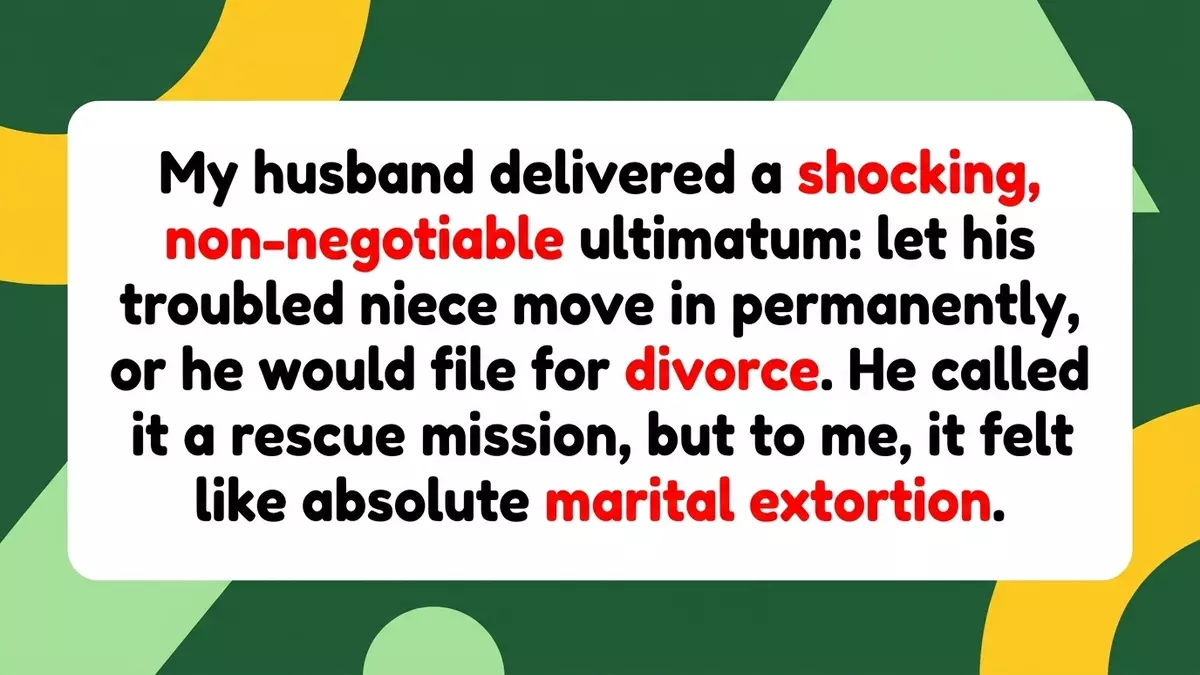
| Partner | Primary Focus | Approach to the Crisis | Impact on the Relationship |
| Husband | Niece's immediate physical safety | Unilateral ultimatum; threat of divorce | Destroys trust; creates marital resentment |
| Wife | Protecting her home and existing daughter | Seeking collaborative, joint planning | Feels trapped, betrayed, and devalued |
By forcing the niece's relocation through a hostile ultimatum, the husband guaranteed that the healing environment would be compromised by constant domestic tension. The wife was left facing an agonizing choice: accept a massive, un-agreed-upon responsibility or watch her own daughter’s family unit pull apart.
The Online Community Rejects the Weaponization of Marriage
Looking for perspective on whether his drastic measures were justified given the noble cause, the story was shared online, leaving mutual friends and internet onlookers deeply divided.
Noble Intentions, Broken Execution
The vast majority of the online community came down hard on the husband, labeling his behavior toxic and manipulative. While users deeply sympathized with the desperate urge to protect an abused child, they fiercely rejected his decision to hold his marriage hostage.
-
Marital Extortion: Commenters pointed out that using divorce as a bargaining chip for a lifestyle change is a form of emotional manipulation that permanently breaks marital trust.
-
The Blueprint for Failure: Many noted that forcing a traumatized child into a home where the aunt feels resentful and forced into caretaking is a recipe for a secondary psychological crisis for the little girl.
-
Neglecting His Own Child: Onlookers heavily criticized the husband for being willing to dismantle his own daughter's stable home life in his rush to save his niece, rather than exploring alternative legal or foster care avenues.
Navigating Extended Family Crises Without Demolishing Your Marriage
Protecting an innocent child from abuse is a vital obligation, but destroying a marriage via non-negotiable ultimatums is rarely the only path to safety. When facing severe extended family crises, relationship experts recommend maintaining open communication channels to protect the primary partnership:
-
Seek Joint Protective Interventions: Work together as a team to involve Child Protective Services, legal family advocates, or temporary foster placements while assessing how your household can realistically help.
-
Separate Urgency from Permanence: Recognize that getting a child out of a dangerous situation immediately does not automatically mean a permanent, un-vetted adoption. Utilize emergency shelters or other relative networks to buy time for collaborative planning.
-
Preserve the United Front: A traumatized child requires an incredibly stable environment. If a spouse is hesitant, address their concerns about space, finances, and emotional bandwidth constructively rather than resorting to name-calling or divorce threats.