
Chapter 3
Understanding the Full Picture
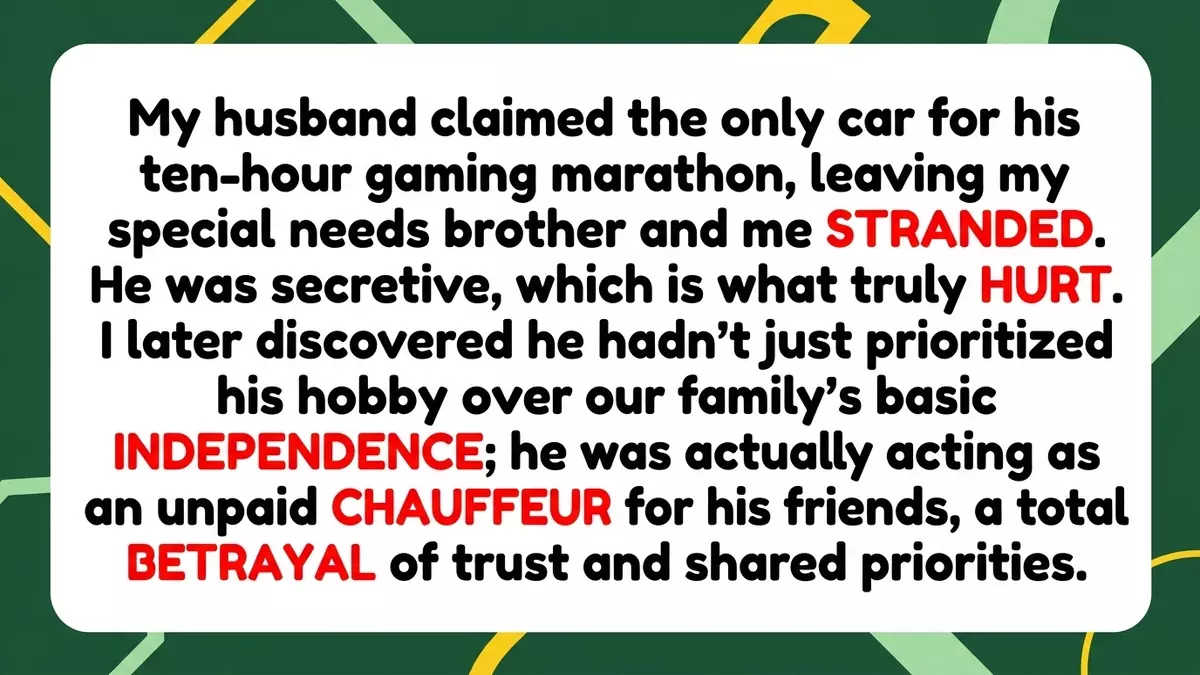
However, once the carpooling element was revealed, several commenters noted that the husband's stubborn insistence became much more understandable, even if his execution was flawed. Knowing that multiple people were relying on him made his reluctance to surrender the keys clear, though it highlighted a severe lack of proactive communication.
Conclusion
At the heart of this dispute lies a universal struggle: balancing personal freedom with family obligations. Independent hobbies are crucial for a fulfilling life, but they cannot comfortably exist in a marriage without complete transparency. When couples treat critical resources as shared responsibilities rather than personal property, they protect both their independent social lives and their mutual respect under one roof.
Frequently Asked Questions
1. Was the husband wrong to demand the car for a 10-hour game night?
Yes. Demanding exclusive use of a shared family vehicle for an extended period without a prior agreement is unfair, especially when another family member relies on that car for caregiving duties. While his desire to see his friends is valid, the delivery and lack of consultation created an unequal dynamic.
2. How should couples split a single car when schedules conflict?
Couples should prioritize essential responsibilities, such as medical care, work, and caregiving, over recreational hobbies. If both activities are important, the partner attending the recreational event should explore alternative transportation options like rideshares, carpooling with friends, or public transit.
3. Why is the "parent-child dynamic" harmful to a marriage?
The parent-child dynamic erodes romantic intimacy and mutual respect. When one partner feels responsible for policing the other's behavior, it creates deep resentment. Meanwhile, the partner who feels monitored shuts down or rebels, preventing the couple from solving problems as equal adults.
4. How can a single-car family handle unexpected emergencies?
Families with one vehicle should always have a backup safety plan. This includes maintaining a digital fund for emergency rideshares, coordinating with trusted nearby neighbors, or ensuring the partner who takes the car stays within a reasonable distance and keeps their phone fully charged.
5. What should you do if your partner secretly commits to helping friends at your expense?
Address the issue calmly by focusing on the lack of communication rather than attacking the friends. Explain how making unilateral promises to outsiders disrupts the household schedule, and agree that any future favors involving shared resources must be discussed and approved together first.