
Chapter 3
Frequently Asked Questions
1. What is "boundary creep" in a family dynamic?
Boundary creep occurs when a small, reasonable request or favor slowly expands over time into a massive, unmanageable obligation without an explicit renegotiation. It thrives on unspoken expectations and the helper's reluctance to say "no" due to guilt.
2. How can I tell if a lonely relative is manipulating me or just lonely?
The intent is rarely malicious manipulation. In most cases, a relative is simply experiencing late-life isolation and lacks the communication tools to ask for purely social company. They create tasks because chores offer a structured, reliable excuse to keep you around.
3. How do you handle family members who give you a guilt trip over boundaries?
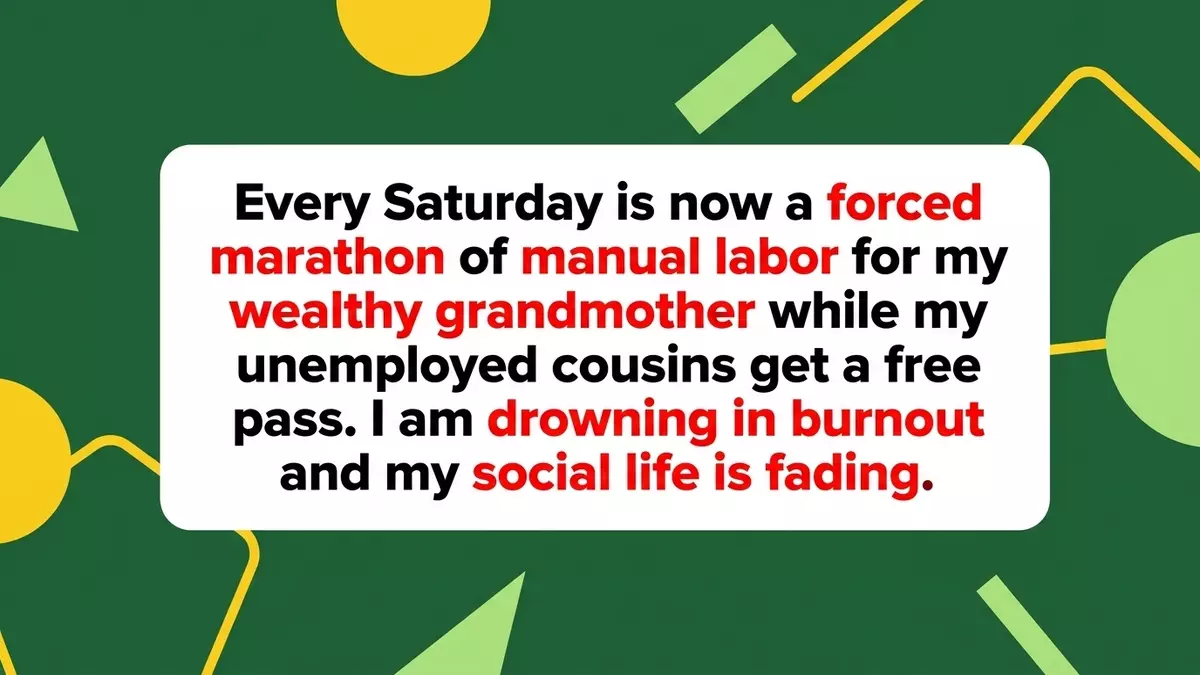
Acknowledge their perspective with empathy, but restate your limit firmly without over-explaining. You can say: "I love Grandma deeply and want to see her, but my current schedule doesn't allow me to spend my entire Saturday doing yard work anymore. Let's find another day where I can visit just to chat."
4. Is it selfish to prioritize my social life over helping an aging grandparent?
No. Balancing career growth, education, romantic relationships, and mental health is an essential part of transitioning into adulthood. Healthy relationships require a balance; sacrificing your foundational young-adult years to perform tasks that can easily be outsourced is unsustainable.
5. What are effective ways to involve lazy family members in grandparent care?
Create a shared, visible calendar or group chat where tasks are clearly delegated and rotated. Instead of asking for vague help, issue direct, specific requests: "I am handling Grandma's groceries this Sunday; I need [Cousin's Name] to handle her lawn mowing on Saturday."