
Chapter 3
Sharing the Shared Frustrations of Educators
While most advocated for total silence, some commenters shared their own frustrating—and occasionally hilarious—encounters with similarly desperate attention-seeking tactics from parents. The consensus remained clear: while the temptation to clap back with a sarcastic email response is incredibly high, protecting your professional reputation by utilizing administrative shields is always the wiser move in the long run.
Conclusion: Balancing Engagement and Self-Preservation
Navigating the delicate balance between constructive parental engagement and personal peace is one of the toughest aspects of modern teaching. While parents want the best for their children, fabricating a fake health crisis completely destroys professional courtesy.
Ultimately, resolving these types of domestic and academic disagreements requires drawing hard lines. A teacher's vacation time must remain a sanctuary, and emergency channels must be preserved for actual life-or-death situations, ensuring that the school community remains safe, respectful, and functional for everyone involved.
Frequently Asked Questions (FAQs)
1. What is "snowplow parenting" and how does it affect teachers?
Snowplow parenting refers to a style where parents forcefully remove any obstacles, challenges, or discomforts from their child's path to ensure their success. This behavior affects teachers by subjecting them to intense pressure, aggressive emails, and boundary violations whenever a student receives less than a perfect grade.
2. Was the teacher wrong for not replying to the parent's grading concerns?
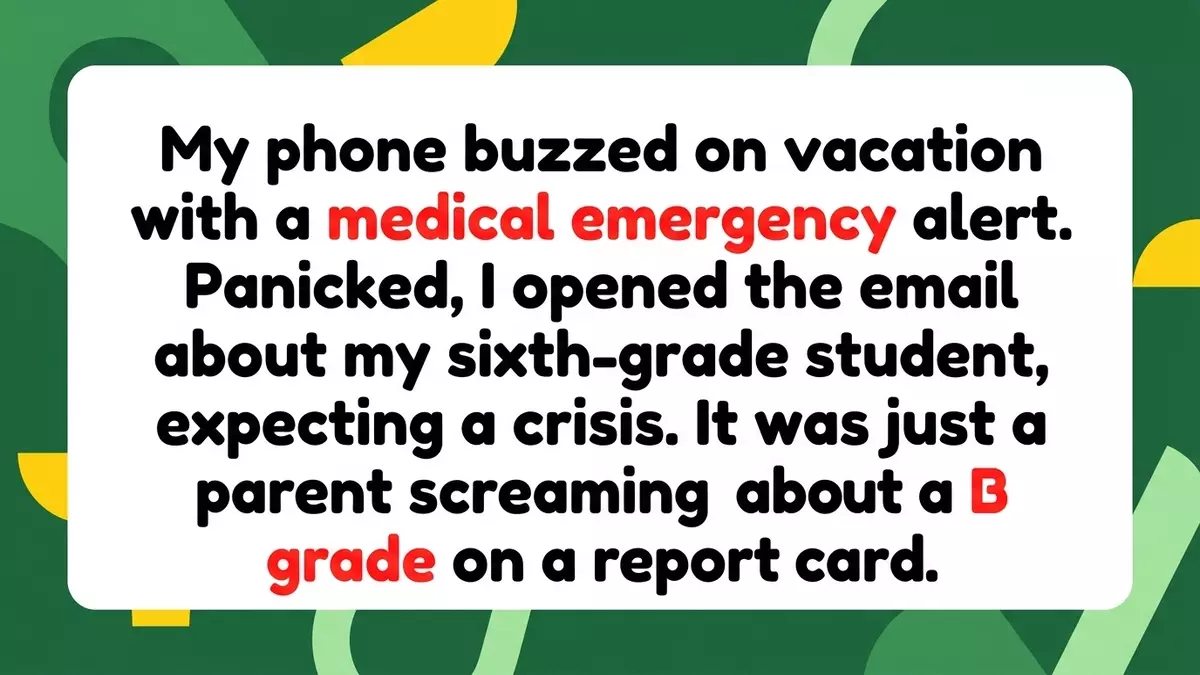
No, the teacher was entirely justified in staying silent. The email was sent during the summer vacation when the teacher was officially off the clock. Furthermore, because the parent used a deceptive and manipulative subject line to force an immediate opening, the message should be handled exclusively by school leadership.
3. How should a school administration handle a parent who fakes an emergency?
School administrations should issue a formal warning to the parent, explicitly outlining the policies regarding communication channels. Principals can require that all future communications from that specific parent go directly through administrative filters rather than reaching the teacher's personal inbox.
4. Why are parent interactions a leading cause of teacher burnout?
Many teachers face relentless, unsupportive, or hostile messages from parents who refuse to accept accountability for their children's behavior or grades. This ongoing emotional strain, combined with a lack of respect for personal time, leaves educators feeling exhausted and unappreciated, leading many to exit the profession entirely.
5. What are the best ways for teachers to protect their personal time during vacations?
Teachers can protect their mental peace by setting strict out-of-office automated email replies, turning off work notifications on their personal mobile devices, and refusing to log into grading portals during official school breaks. Enforcing these boundaries early prevents parental boundary-crossing from ruining their recovery time.