
Chapter 3
Frequently Asked Questions
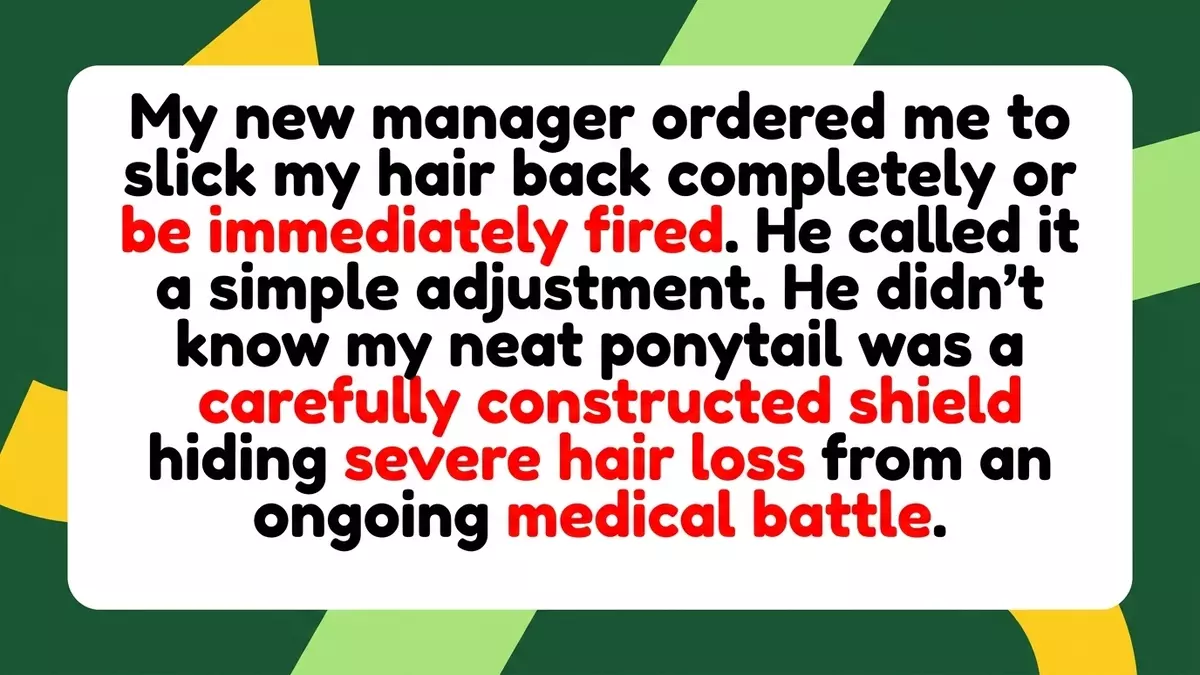
Can a company legally fire you for your hairstyle?
In many regions, employers can enforce reasonable, gender-neutral grooming policies. However, if a hairstyle is tied to an individual's race, religion, or a documented medical condition, firing them without engaging in an accommodation process may violate federal anti-discrimination laws like the ADA or Title VII.
What should I do if my boss criticizes a appearance choice caused by a medical condition?
You should document the conversation immediately, noting the date, time, and exact language used. Avoid arguing in the moment; instead, request a meeting with Human Resources and prepare to provide a doctor's note verifying that your appearance choice is related to a medical necessity.
Do I have to tell my employer the exact medical reason for my hair loss?
No. Under ADA guidelines, you are generally not required to share your entire medical history or specific diagnoses with your direct supervisor. A medical note from your doctor simply needs to state that you have a medical condition requiring a reasonable modification to the standard dress code.
What counts as a "reasonable accommodation" for hair-related medical issues?
Reasonable accommodations are highly flexible and depend on the workplace. Examples include allowing an employee to wear a neat ponytail, permitting wide headbands, scarves, or wigs, or adjusting the wording of a grooming policy to focus on cleanliness rather than specific styling methods.
How can I support a coworker who is struggling with visible health conditions?
The best approach is to offer a supportive, non-judgmental presence. Avoid pointing out changes in their appearance or offering unsolicited medical advice. If you witness a supervisor bullying a colleague over their appearance, consider reporting the behavior to HR or offering to serve as a witness for the affected employee.