
Chapter 1
Bachelor Pad Mystery Solved After Owner Catches Intruder in His Shower
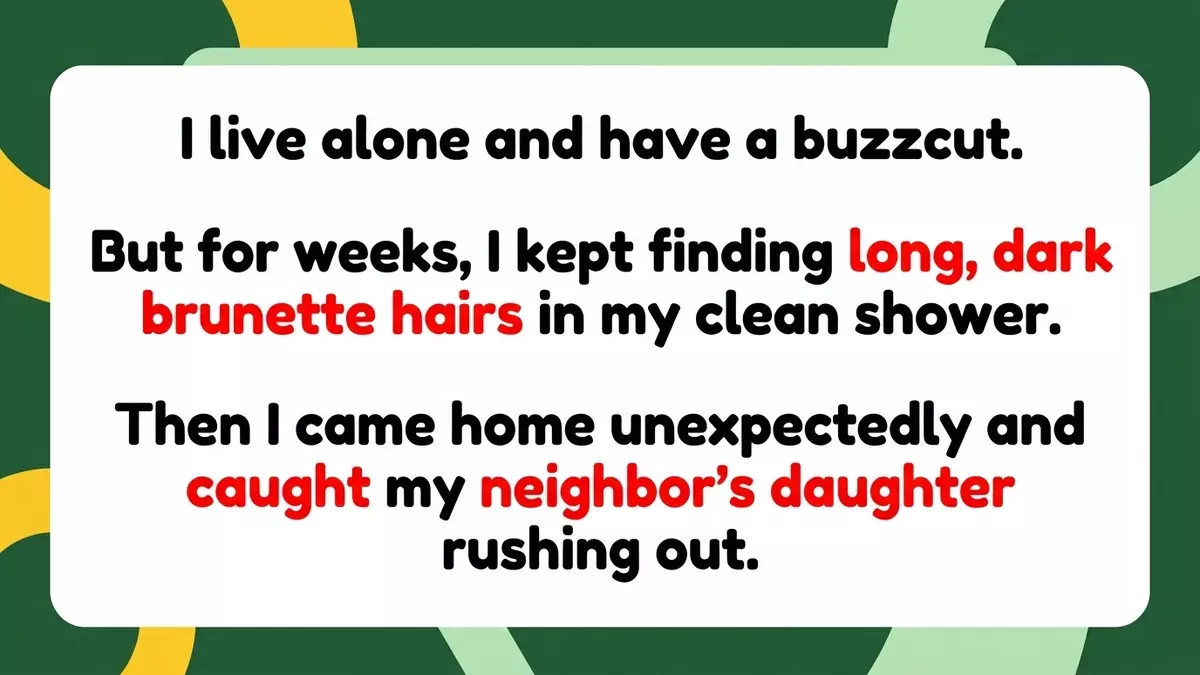
We all know that creepy feeling when something in your home is just slightly off. For one young bachelor living alone on the top floor of a quiet apartment building, that feeling became a daily reality when long, dark brunette strands began appearing in his meticulously cleaned bathroom.
He had sported a one-inch buzzcut for a decade, making the sudden influx of five-inch tresses a baffling domestic mystery. At first, he brushed it off as stray fibers from crowded gym sessions or public transit commutes. But when the mysterious hairs began turning up inside his freshly washed shower and deep within his private sock drawers, his confusion spiraled into genuine unease.
The truth finally came to light on an unexpected day off. A sudden trip home during work hours forced a shocking, face-to-face confrontation on the stairwell. As he walked up, he passed his neighbor's college-aged daughter rushing down. In a split second, a mundane neighborly passing transformed into a chilling realization as a familiar scent—his own expensive body wash—and damp hair betrayed a massive breach of trust. Her brief, defensive admission that she "just needed a quiet place to get away and use the shower" confirmed his worst fears, leaving behind a trail of unanswered questions about how deep this invasion truly went.

Bachelor Pad Mystery Solved After Owner Catches Intruder in His Shower
The Psychology of Phrogging: Inside the Minds of Secret Guests
Finding out that an unauthorized person has been secretly accessing your private living space is a deeply violating experience that instantly shatters your fundamental sense of safety. In psychiatric and criminological circles, this bizarre phenomenon is formally known as phrogging—the act of secretly entering, spending time, or temporarily residing in someone else’s home without their knowledge or explicit permission.
Unlike typical burglars who enter a property to commit theft, individuals who engage in phrogging are often driven by entirely different psychological motivators:
-
The Escape Mechanism: A desire for a temporary sanctuary away from a chaotic or abusive home life, often targeting quiet neighbors who live alone.
-
Thrill-Seeking Behavior: The intense rush of adrenaline that comes from navigating a forbidden space without getting caught.
-
Obsessive Fixation: An unhealthy, quiet fixation on the occupant, where using their private shower, sleeping in their bed, or browsing their sock drawers provides an intimate sense of connection.
According to safety experts writing for Psychology Today, home invasions of this non-violent yet highly intrusive nature can inflict severe psychological damage on the victim. It frequently triggers acute hypervigilance, profound sleep disruption, and chronic anxiety, as the victim's primary sanctuary has been structurally compromised. The neighbor’s casual, defensive excuse suggests a severe lack of baseline boundaries and potentially an underlying personal or psychological struggle, reflecting an extreme detachment from normal social contracts.